 |
| KEYNOTE |
|
 |
| . |
|
|
Miguel A. Bañares
CSIC-Instituto de Catalisis, Spain
Keynote – Plenary Session
Prof. Dr. Miguel A. Bañares obtained his PhD in Chemistry in 1992 at the University of Salamanca, Spain. He is a postdoctoral fellow at Lehigh University, PA, and at the University of Notre Dame, IN. He is Full Research Professor at the Institute for Catalysis, CSIC, Spain. He is Editor-in-Chief for Catalysis Today (Elsevier) and co-editor of the Handbook for Advanced Catalyst Characterization (Springer). He has been Deputy Vice-President of CSIC, Spanish National Research Council. He is co-founder of Advanced Dispersed Particles in 2011, a CSIC spin-off company. He is Doctor Honoris Causa by the Université de Caen Normandie, France.
He has more than 230 publications (https://orcid.org/0000-0003-3875-4468) in international journals and an “h” factor or 50 with more than 30 plenary/keynote lectures. Bañares research stands on the use of real-time Raman spectroscopy during catalysis combining in situ spectroscopic characterization of catalyst structure with simultaneous activity measurement, so that both, structure and performance are measured simultaneously. He coined the term “operando” to identify this advanced in situ spectroscopy, his new term is widely used in literature now. He has recently implemente a research line on molecular bases of nanoparticle toxicity in the context of reactive aspects in oxidic and polymeric materials.
|
|
|
|
|
 |
| INVITED |
|
|
| . |
|
|
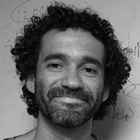
Cinzia Casiraghi
University of Manchester, UK
Invited – Plenary Session
Prof Casiraghi holds a Chair in Nanoscience at the Department of Chemistry, University of Manchester (UK). She received her B.Sc. and M.Sc. in Nuclear Engineering from Politecnico di Milano (Italy) and her Ph.D. in Electrical Engineering from the University of Cambridge (UK). In 2007, she was awarded with the prestigious Kovalevskaja Award (1.5M Euro). In 2010 she joined the department of chemistry at the University of Manchester. She is recipient of several awards, including the ERC Consolidator (2015), ERC Proof of Concept (2020), ERC Advanced grants (2022), as well as the Leverhulme Award in Engineering (2016, 100K GBP), and the RSC 2020 Gibson-Fawcett Award. Her current research work focuses on the development of biocompatible 2D inks and their use in printed electronics and biomedical applications.
|
|
|
|
|
 |
| INVITED |
|
|
| . |
|
|
Hilton B. de Aguiar
Laboratoire Kastler Brossel - CNRS, France
Invited – Plenary Session
Hilton B. de Aguiar is a CNRS Research Director at the Laboratoire Kastler Brossel (ENS-PSL, Sorbonne Université, Collège de France) in Paris. He obtained his PhD in Biophotonics from EPFL and the Max-Planck Institute, and, after postdoctoral positions in Stuttgart University and Fresnel Institute, was awarded a Junior Research Chair at ENS Paris to establish his independent group. His research develops novel computational imaging modalities, most notably deep imaging in scattering media via wavefront shaping and compressive Raman microspectroscopy: a computational framework that has cranked up speeds in chemical imaging with the weak spontaneous Raman effect, with applications spanning label-free biological and operando imaging. He has co-authored over 50 peer-reviewed publications including in Nature, Nat. Phot., Nat. Nanotech., Nat. Comm. and Science Advances, holds three patents, and his work is supported by major EU (RIAs, EIC Transition, QuantERA), French and international (Chan Zuckerberg Initiative) grants. He is an Optica Senior Member, Associate Editor of Advanced Imaging, and in 2026 co-founded raiman: a startup exploiting the compressive Raman technology.
|
|
|
|
|
 |
| INVITED |
|
|
| . |
|
|
Rudolph Erasmus
University of the Witwatersrand, Johannesburg, South Africa
Invited – Plenary Session
Rudolph Erasmus is an Associate Professor in the School of Physics at the University of the Witwatersrand, Johannesburg, South Africa, where he also obtained his PhD degree. He is interested in how defects influence material properties and the pathways that defect engineering offer to improve materials for specific applications. He is also a Senior Instrument Scientist in the Microscopy and Microanalysis Unit (MMU) at Wits University, where he is responsible for the Raman and Photoluminescence instrumentation in the School of Physics and in the MMU since 2001. This has afforded him wide experience with the application of these techniques, including research on nanostructures, including carbon nanomaterials, solid state fuel cells, irradiation damage in materials, pigments on archaeological artefacts and various types of thin films. He is currently the Immediate Past President of the South African Institute of Physics (SAIP) with portfolio International Liaison and is Chairperson for the LOC of the IUPAP International Conference on Physics on “Physics for Sustainable Development: Equitable Wellbeing on a Healthy, Lively Planet” to be held in South Africa in October 2027.
|
|
|
|
|
 |
| PLENARY |
|
|
| . |
|
|
Andrea Ferrari
Cambridge Graphene Centre / University of Cambridge, UK
Plenary Talk
Andrea C. Ferrari earned a PhD in electrical engineering from Cambridge University, after a Laurea in nuclear engineering from Politecnico di Milano, Italy. He is Professor of Nanotechnology and the Director of the Cambridge Graphene Centre and of the EPSRC Centre for Doctoral Training in Graphene Technology. He is Fellow of Pembroke College, the American Physical Society, the Institute of Physics and the Materials Research Society. His research interests include nanomaterials growth, modelling, characterization, and devices. He was awarded the Royal Society Brian Mercer Award for Innovation, the Marie Curie Excellence Award, the Philip Leverhulme Prize, The EU-40 Materials Prize, The Royal Society Wolfson Research Merit Award. He is also the Chairman of the Executive Board of the EU Graphene Flagship
|
|
|
|
|
 |
| INVITED |
|
|
| . |
|
|
Tommaso Giovannini
University of Rome Tor Vergata, Italy
Invited – Plenary Session
Tommaso Giovannini is Associate Professor of Theoretical Condensed Matter Physics at the University of Rome Tor Vergata, Italy. His group develops quantum, classical and hybrid quantum/classical approaches to describe light–matter interactions in complex systems, with a particular focus on nanoplasmonics, molecular plasmonics and surface-enhanced spectroscopies, while retaining a realistic atomistic description of matter at the nanoscale. He received his PhD cum laude from the Scuola Normale Superiore (Pisa) in 2019. He then worked at NTNU (Trondheim) and at the Scuola Normale Superiore before joining the University of Rome Tor Vergata in 2024. He is a Fellow of the Young Academy of Europe, and his awards include the Raman Award for the Best Junior Researcher (ICORS), the Eolo Scrocco Award and the Philip J. Stephens Award, as well as his selection for the CAS Future Leaders Top 100 program. Since 2026 he has been the PI of the ERC Starting Grant CHOPIN
|
|
|
|
|
 |
| INVITED |
|
|
| . |
|
|
Juan Carlos González Rosillo
IREC, Spain
Invited – Plenary Session
Juan Carlos González-Rosillo is a physicist from the Universidad Autónoma de Madrid and holds an M.Sc. in Materials Science and Nanotechnology and a Ph.D. in Materials Science from the Universitat Autònoma de Barcelona. He carried out his doctoral research at the Institute of Materials Science of Barcelona (ICMAB-CSIC) and was a visiting researcher at the University of Geneva and Forschungszentrum Jülich. He subsequently joined the Massachusetts Institute of Technology as a postdoctoral researcher, working on lithium-based oxide materials for neuromorphic computing and on thin film solid electrolytes for next-generation all-solid-state batteries and microbatteries. In 2020, he joined IREC with a Tecniospring INDUSTRY fellowship to develop microbattery technologies aimed at powering micro- and nanoscale devices. Juan Carlos is currently a Ramón y Cajal Researcher, and current research interests include solid-state batteries, thin film microbattery architectures, and advanced operando nanoscale characterization, including Tip-Enhanced Raman Spectroscopy (TERS).
|
|
|
|
|
 |
| INVITED |
|
|
| . |
|
|
Van Hoan Le
CEA Leti, France
Invited – Plenary Session
Dr. Van-Hoan Le is a senior research engineer and Raman spectroscopy expert at CEA-Leti, holding a PhD in Geosciences from Université de Lorraine (2020). He specializes in developing advanced Raman and photoluminescence (PL) characterization methodologies for semiconductors and emerging materials. As the manager of multiple Raman platforms at the Nanocharacterization Platform (PFNC), his expertise encompasses polarization-resolved analysis, in-situ/operando measurements, and Tip-Enhanced Raman Spectroscopy (TERS). His work bridges laboratory characterization and automated cleanroom in-line metrology for semiconductor manufacturing. Dr. Le's current research focuses on 2D transition-metal dichalcogenides (TMDs), combining multimodal techniques to investigate material growth, defects, and integration. Additionally, he is the lead developer of SPECTROview, an open-source Python platform dedicated to the processing, fitting, and visualization of complex 1D and 2D hyperspectral data.
|
|
|
|
|
 |
| KEYNOTE |
|
|
| . |
|
|
Ewelina Lipiec
Jagiellonian University, Poland
Keynote – Plenary Session
Ewelina Lipiec is a Professor at Jagiellonian University (since 2023) with a strong research background in biophysics and molecular spectroscopy. She holds a habilitation in Natural Sciences (2020) and a Ph.D. in Physics from the Polish Academy of Sciences. Her scientific record includes an H‑index of 24, over 65 publications, and 1773 citations. She has completed postdoctoral research at ETH Zürich, EPFL, and Monash University. Her work focuses on molecular micro- and nanospectroscopy, lipid monolayers, DNA damage and repair, protein assembly and amyloids, and chemometrics. She collaborates internationally with leading researchers, including Prof. Renato Zenobi (ETHZ) and Prof. Bayden Wood (Monash University)
|
|
|
|
|
 |
| INVITED |
|
|
| . |
|
|
Claire Mangeney
Université Paris - Descartes, France
Invited – Plenary Session
Claire Mangeney is professor at LCBPT Laboratory of Université Paris Cité. Her research sits at the interface of surface chemistry, nanotechnology, and biology, where she develops original chemical strategies using aryl diazonium salts to functionalize surfaces, particularly plasmonic nanoparticles. She focuses on applications in SERS sensing, plasmonic nanosensors, SERS tags and contrast agents for bioimaging, aiming to combine chemical precision with advanced optical detection. Her work includes the design of nanoscale tools that serve as ideal interfaces to interrogate biological systems at multiple scales, as well as their integration into “all-optical” sensing devices. She has contributed to over 20 projects (ANR, LabEx, IdEx…) and coordinated 14 of them. She has co-authored more than 100 publications and holds two patents.
|
|
|
|
|
 |
| KEYNOTE |
|
|
| . |
|
|
Giulia Manina
Institut Pasteur, France
Keynote – Plenary Session
Giulia Manina is Research Director at the Institut Pasteur in Paris, where she heads the Microbial Individuality and Infection Research Unit. A molecular microbiologist by training, she obtained her PhD from the University of Pavia in 2009, where, within the European NM4TB consortium, she studied mechanisms of action and resistance of a new class of anti-tuberculosis compounds. She subsequently joined EPFL, Switzerland, for postdoctoral research, developing expertise in mycobacterial phenotypic heterogeneity, microfluidics, and live-cell imaging. In 2015, she established her own research group at the Institut Pasteur and has since developed a multidisciplinary program combining molecular microbiology, cell biology, microsystems engineering, and quantitative imaging. Her research focuses on how cell-to-cell phenotypic variation within genetically clonal mycobacterial populations contributes to adaptation, antibiotic survival, host interactions, and persistence. She has contributed to major European tuberculosis consortia, including NM4TB and ERA4TB, and coordinated the ANR public-private consortium TREATABLE. Her work has been recognized by the Novartis Prize in 2009, the Swiss TB Award in 2015, and the iXcore–Exail–iXlife Research Foundation in 2025. A major goal of her current research is to identify functionally important bacterial phenotypes and determine how they can be leveraged for new therapeutic targets, diagnostic markers, and strategies to improve the control of tuberculosis and other mycobacterial infections.
|
|
|
|
|
 |
| PLENARY |
|
|
| . |
|
|
Juergen Popp
Leibniz-IPHT, Germany
Plenary Talk
Prof. Dr. Jürgen Popp studied chemistry at the Universities of Erlangen and Würzburg and received his PhD in chemistry before conducting postdoctoral research at Yale University. Since 2002, he has held the Chair of Physical Chemistry at Friedrich Schiller University Jena and since 2006 has additionally served as Scientific Director of the Leibniz Institute of Photonic Technology. His research focuses on biophotonics, Raman spectroscopy, multimodal optical imaging, and AI-driven biomedical diagnostics with strong emphasis on clinical translation. He is internationally recognized as a leading expert in optical health technologies and translational photonics. Jürgen Popp has authored more than 1,170 peer-reviewed publications (h-index 92) and is inventor of 21 patents. He is Editor-in-Chief of the Journal of Biophotonics and the Journal of Raman Spectroscopy and has delivered more than 200 invited lectures worldwide, including over 60 keynote and plenary talks. He won several awards among others the Pittsburgh Spectroscopy Award, the SPIE Biophotonics Innovation Award, and the Ellis R. Lippincott Award
|
|
|
|
|
 |
| KEYNOTE |
|
|
| . |
|
|
Andrea Mario Rossi
INRIM, Italy
Keynote – Plenary Session
Andrea Mario Rossi leads the Chemical, Physical, and Nanotechnologies program at INRiM and serves as the chair of the EURAMET European Metrology Network for Safe and Sustainable Food (EMN Food). He is also part of the Italian node of the METROFOOD infrastructure, which promotes metrology in food and nutrition. As the scientific lead of the food safety metrological infrastructure (IMPreSA), he plays a key role in advancing food safety. With over 140 publications, his research spans IR and Raman spectroscopy, SERS, TERS, and studies on micro- and nanoparticles, including contamination in food samples and biological tissues
|
|
|
|
|
 |
| KEYNOTE |
|
|
| . |
|
|
Sylvie Roussel
Ondalys, France
Keynote – Plenary Session
Dr. Sylvie ROUSSEL holds an MS in Agricultural Engineering (94) and a MS in control and robotics (95) and a PhD in Machine Learning (98) from SupAgro Montpellier in France. She has then been a Research Associate at Iowa State University (IA, USA) for Machine Learning applied to NIR spectroscopy.
Since 2003, she is the founder and CEO of Ondalys company, a consulting and training company in chemometrics / Machine Learning for instrumental data (spectroscopy, imagining, chromatography…) for many industrial sectors such as pharma/biotech, chemistry and agrifood. http://ondalys.fr/?lang=en
From 2009 to 2023, Dr. Roussel was also CEO of INDATECH company: in 2009, together with Dr. Chauchard, she founded INDATECH innovative company, an equipment manufacturing company dedicated to spectroscopic sensors for PAT (Process Analytical Technology). In 2017, INDATECH became part of the French industrial group Chauvin-Arnoux. www.indatech.eu
As a scientist, she is currently part of the boards of the NIR French group (HélioSPIR) and the Vibrational Spectroscopy French Group (GFSV), as well as a European Expert for Machine Learning and Optics for EU collaborative projects.
|
|
|
|
|
 |
| INVITED |
|
|
| . |
|
|
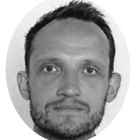
Cyril Ruckebusch
University of Lille, France
Invited – Plenary Session
Cyril Ruckebusch is a Professor at LASIRE CNRS, Université de Lille, specializing in chemometrics and data science, with a focus on time-resolved spectroscopy, spectral imaging, and multivariate data analysis for applications in analytical spectroscopy, physical chemistry, and biological optical imaging. He has authored 150+ peer-reviewed publications and serves as Editor-in-Chief of the Journal of Chemometric
|
|
|
|
|
 |
| KEYNOTE |
|
|
| . |
|
|
Dietrich RT Zahn
TU Chemnitz, Germany
Keynote – Plenary Session
Prof. Dr. Dr. h.c. Dietrich RT Zahn studied Physics at RWTH Aachen and received a PhD degree in 1988 from the University of Wales in Cardiff. After a post-doc period at TU Berlin, he became Professor for Semiconductor Physics at the Chemnitz University of Technology in 1993. His research interests focus on the spectroscopic characterisation of semiconductor surfaces, interfaces, ultra-thin films, and low-dimensional structures (> 1000 publications, h-index 67, citations >24000). He served as Vice President for Research and as Head of the Thin Film Division of the German Physical Society (DPG). He was Speaker of the DFG Research Units FOR 1154 “Towards Molecular Spintronics” and FOR 1713 “Sensorical Micro and Nano Systems”. Prof. Zahn is President of the Gaede Foundation and Vice Scientific Director of the Research Center for Materials, Architectures and Integration of Nanomembranes (MAIN).
|
|
|
|
|
| |
|
|